
Every file tells a story. Digital forensics teaches you to read it without changing it.
How digital evidence is collected, preserved and analysed so that it holds up in court: methods, tools and mistakes to avoid, explained by someone who does this work.
A photo on a phone, a chat, a browser history, a server log: today almost every story — a data theft, online defamation, a workplace dispute, a crime — leaves digital traces. They are precious and fragile at the same time. Switching on the wrong device, opening a file with the wrong program or saving a screenshot the wrong way is enough for the evidence to lose its value.
Digital forensics is the discipline that deals with this: identifying, acquiring, preserving, analysing and presenting digital data so that the result can be verified by anyone, including the other side. The principle is easy to state and hard to practise: always work on a copy identical to the original, and be able to show at any moment that nothing has changed.
On Digital Exhibit every topic is split into pages: how it works, the step-by-step procedure, the tools, the pitfalls, the value in court, a case study, a checklist and frequently asked questions.
From seizure to expert report, one step at a time
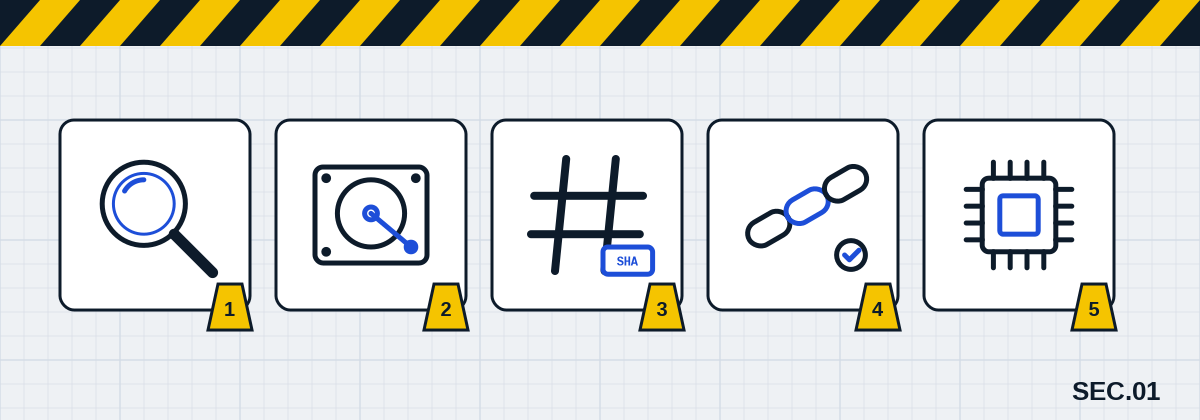
Foundations
What digital evidence is and which rules make it reliable.
- Digital forensics
- Forensic image
- Hashes and integrity
- Chain of custody
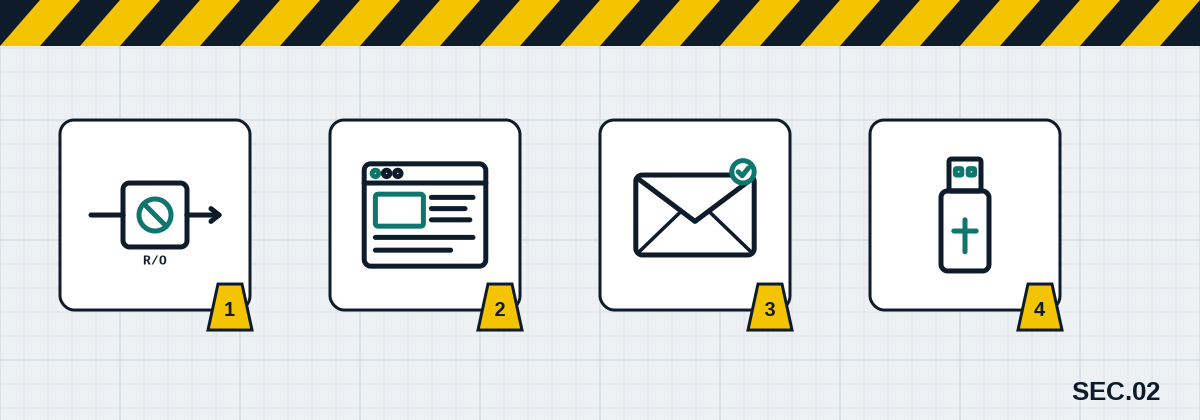
Acquisition
How data is collected without altering it: disks, phones, cloud, web.
- Write blocker
- Web page acquisition
- Forensic acquisition of email
The laboratory’s topics
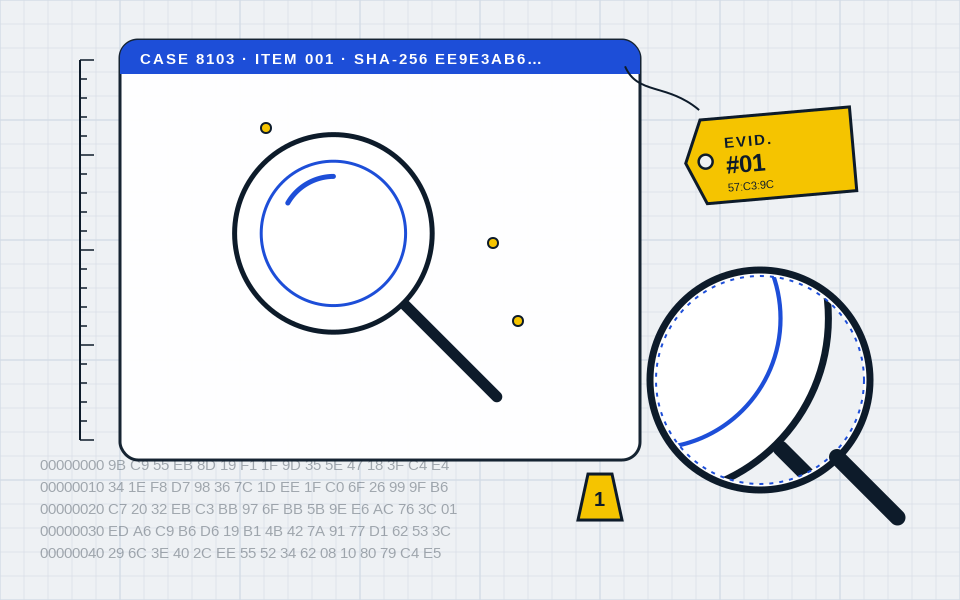
Digital forensics
Digital forensics explained clearly: what it does, its principles, the stages of a digital investigation, the tools and the value of digital evidence in court.
9 pages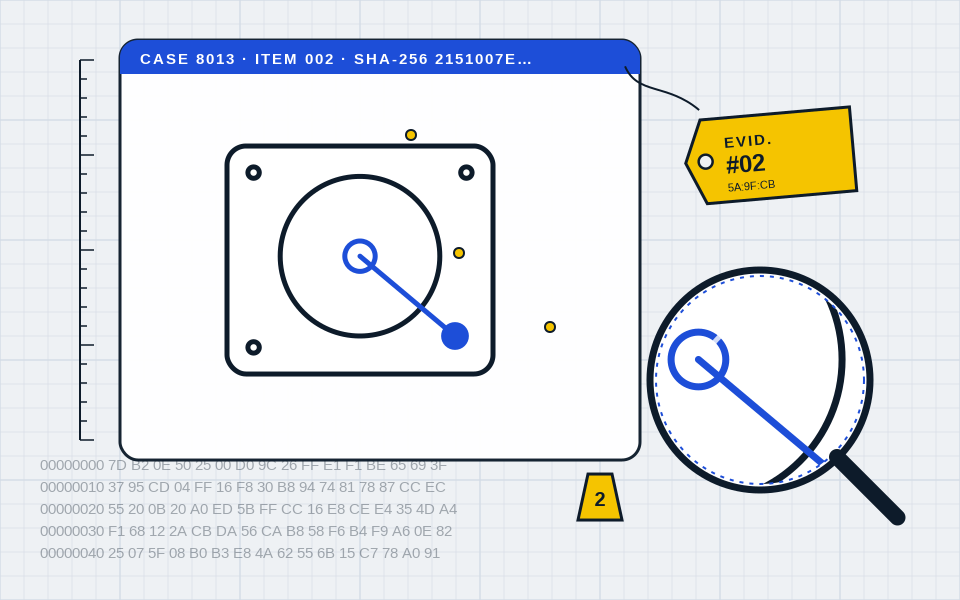
Forensic image
What a forensic (bit-stream) image is, why it differs from an ordinary copy of files and how to prove it is identical to the original.
9 pages
Hashes and integrity
What a hash value is, why a single different bit changes it and how it is used to prove that digital evidence has not been altered.
9 pages
Chain of custody
What the chain of custody is, why without it even perfect evidence can become unreliable and how to keep it properly for devices and digital copies.
9 pages
Order of volatility
What the order of volatility is in digital forensics, why RAM must be acquired before the disk and how to decide whether or not to switch off a running computer.
9 pages
Metadata
What the metadata of files, documents, photos and emails are, where they are found, how they are read in a forensic investigation, how reliable they are and how they are assessed in court.
9 pages
Dates and time zones
How devices record dates and times, UTC and local time, daylight saving, Unix timestamps and other formats, wrong clocks: how to read and compare them correctly in a forensic investigation.
9 pages
ISO/IEC 27037
What ISO/IEC 27037 requires, the four stages of handling digital evidence, the DEFR and DES roles, the principles of relevance, reliability and sufficiency, and the standard’s weight in Italian proceedings.
9 pages
Write blocker
What a write blocker is, why it is essential for acquiring a disk without altering it, the differences between hardware and software models, how to use it and how to verify it.
9 pages
Web page acquisition
How to document a web page, post or website so that it counts as evidence: the limits of screenshots, forensic acquisition, value in Italian courts and mistakes to avoid.
9 pages
Forensic acquisition of email
How emails are acquired as evidence: original format, complete headers, DKIM signatures, cloud mailboxes, Italian certified email (PEC), pitfalls to avoid and the value in court of ordinary and certified email.
9 pages