
What digital forensics is and why it concerns everyone
Digital forensics explained clearly: what it does, its principles, the stages of a digital investigation, the tools and the value of digital evidence in court.

Digital forensics is the discipline that applies scientific methods to identifying, acquiring, preserving, analysing and presenting digital data intended to be used as evidence. Its goal is not just to find information, but to find it in a way that anyone can verify.
Until a few decades ago it was mainly about computer crime. Today it touches almost every matter: a separation where messages count, an employment dispute over stolen documents, an email fraud, online defamation, a road accident in which the car recorded speed and braking. Wherever there is a device there are traces; and wherever there are traces, someone is needed who knows how to collect them without altering them.
The principles
- Integrity
- Evidence must not be modified: it is acquired with tools that prevent this and its integrity is attested with hash values.
- Repeatability
- Another person, with the same data and methods, must be able to reach the same results.
- Documentation
- Every operation is recorded: who, when, with which tool, with what outcome.
- Proportionality
- Only what is needed is acquired, respecting the privacy of the people involved.
- Impartiality
- The expert describes what the data show, even when it does not suit whoever commissioned the work.
The specialisations
Digital forensics divides into branches requiring different skills: analysis of computers and disks, of mobile devices, of networks and logs, cloud forensics, analysis of images and video, of vehicles and connected devices. The site has a topic for each, starting with the fundamentals: the forensic image, hash values and the chain of custody.
The pages of this topic
Digital forensics: how it works
The five stages of a digital investigation, from identifying sources to the final report, and the principle of the identical copy.
Digital forensics: history
From the first computer crimes of the 1980s to today’s rules and standards: how digital forensics was born and grew.
Digital forensics: the step-by-step procedure
How a digital forensics engagement actually unfolds, from the first meeting to the delivery of the report.
Digital forensics: the tools
From write blockers to analysis software: the hardware and software tools of digital forensics and how to choose the right one.
Digital forensics: pitfalls to avoid
The most common mistakes made by those who collect digital evidence without method, and the consequences they can have in court.
Digital forensics: value in court
How digital evidence enters Italian criminal and civil proceedings, the role of experts and the rules introduced by Law 48/2008.
Digital forensics: a case study
The theft of confidential documents by a departing employee, reconstructed through a forensic analysis of the company laptop.
Digital forensics: frequently asked questions
Short answers to the most common doubts about digital forensics, experts and digital evidence.
More topics in this section
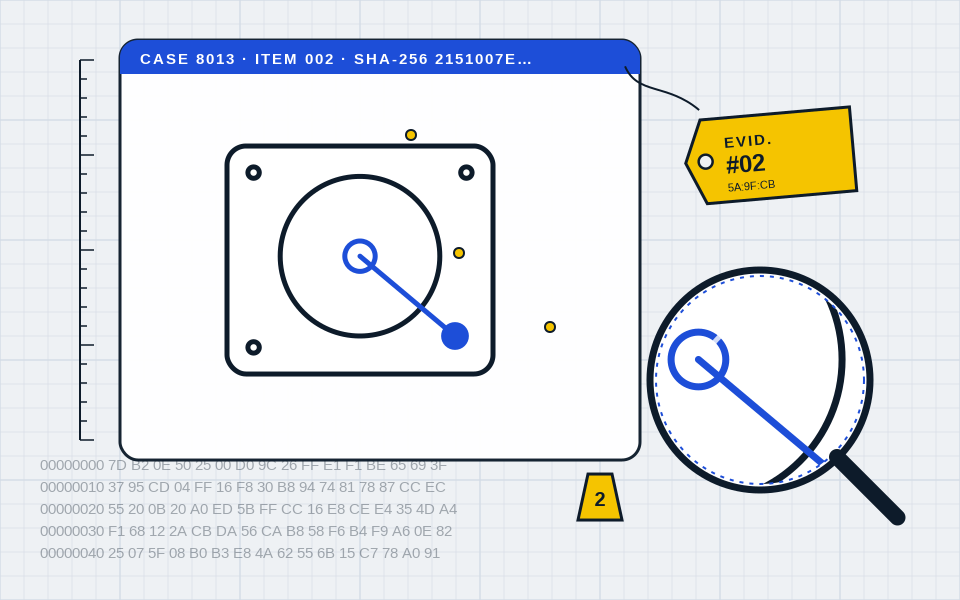
Forensic image
What a forensic (bit-stream) image is, why it differs from an ordinary copy of files and how to prove it is identical to the original.
9 pages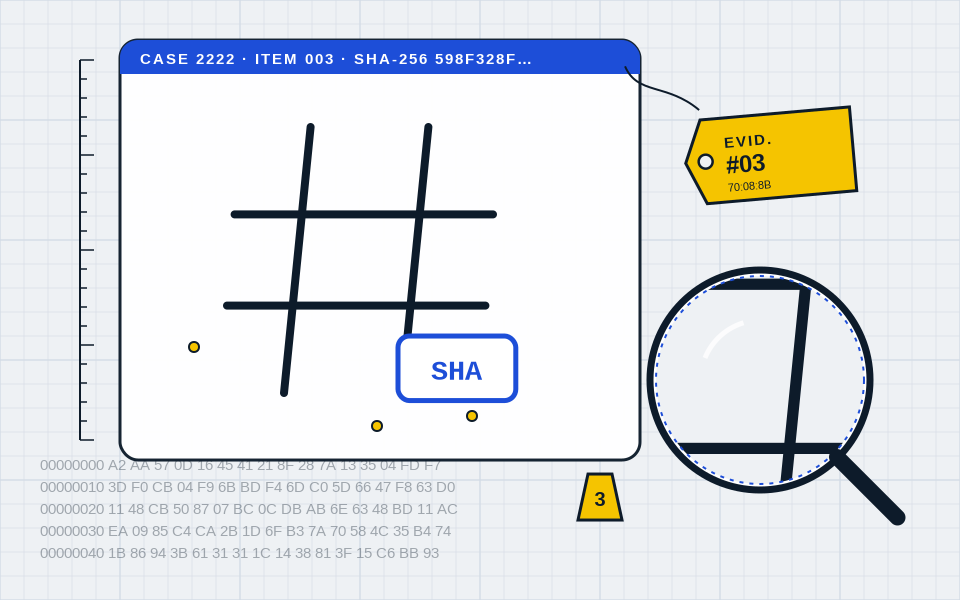
Hashes and integrity
What a hash value is, why a single different bit changes it and how it is used to prove that digital evidence has not been altered.
9 pages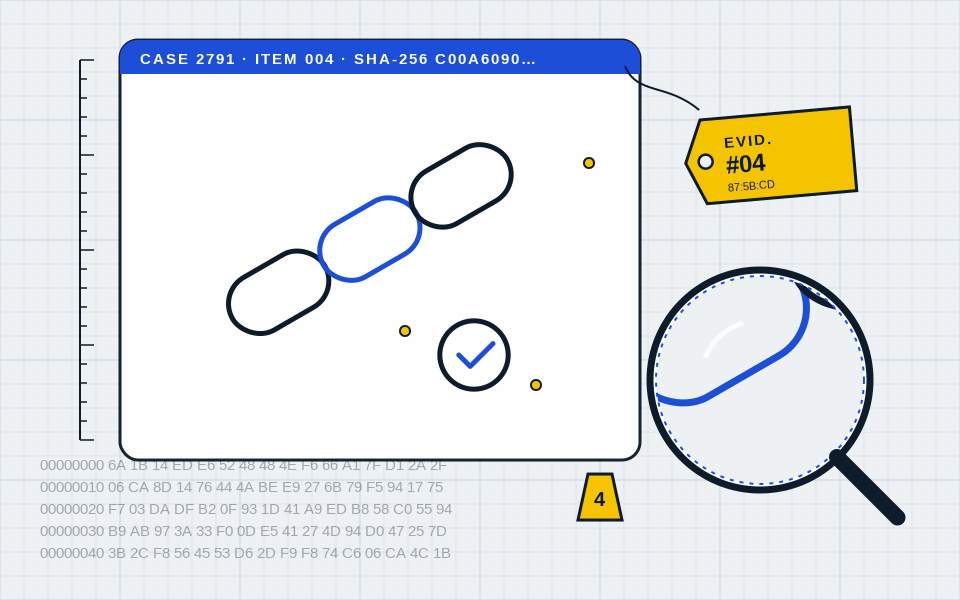
Chain of custody
What the chain of custody is, why without it even perfect evidence can become unreliable and how to keep it properly for devices and digital copies.
9 pages